

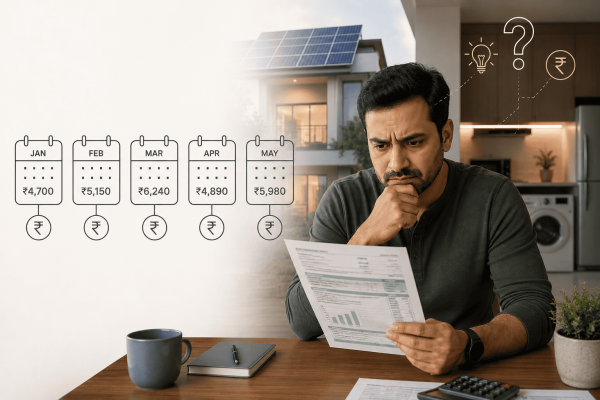

You ran the same appliances. The same fan, the same fridge, the same lights. You were even more careful this month than last. And yet, the bill is higher. Sometimes significantly.
If this has happened to you, you’re not imagining it. And you’re not alone. This is one of the most common and frustrating experiences for electricity consumers in India, and the explanation may have little to do with your behaviour.
Here’s what’s actually going on.
Your Bill Is Not Just About Units Consumed
Most people look at one number on their electricity bill: the total amount due. But that number is made up of several components, and only one of them is directly tied to how much electricity you actually used.
A typical electricity bill in UP may include:
- Energy charges: The cost of units (kWh) you consumed, calculated at the applicable tariff slab rate.
- Fixed charges: A monthly charge based on your sanctioned load (in kW), regardless of how much electricity you actually consumed.
- Meter rent: A small monthly charge for the meter installed at your premises.
- Electricity duty: A state government levy calculated on your electricity charges.
- Fuel Surcharge Adjustment (FSA): A variable charge linked to fluctuations in the cost of generating or purchasing power.
- Other charges: Wheeling charges, regulatory surcharges, or other levies that may vary by state and DISCOM.
The point is simple: even if your unit consumption stays the same, changes in other components can affect your final bill.
Slab-Based Tariffs
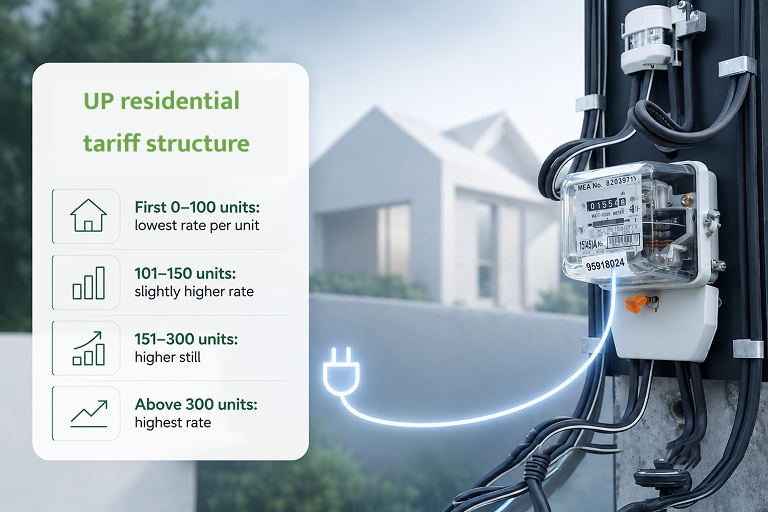
Electricity tariffs in India can follow a slab system, where the applicable rate changes as your consumption increases. Depending on your DISCOM and applicable tariff category, crossing a consumption threshold can affect how your energy charges are calculated.
Imagine your consumption normally sits close to a slab boundary. One month, your usage increases slightly, perhaps because of warmer weather, an extra load of laundry, or guests staying over.
That small increase could move some of your consumption into a higher tariff slab, resulting in a bill increase that feels disproportionate to the few extra units consumed.
This is one reason why two months with nearly identical usage can sometimes produce noticeably different bills.
The Fuel Surcharge Adjustment
This is a component many consumers may not notice, yet it can affect the amount you pay.
The Fuel Surcharge Adjustment, also called FSA or Fuel Cost Adjustment, is a variable charge that electricity distribution companies may apply to account for fluctuations in the cost of generating or purchasing power.
When fuel costs rise, or when a DISCOM has to purchase more expensive power during peak demand periods, additional costs may be reflected through such adjustments. These charges are revised periodically under the applicable regulatory framework.
Even if your electricity consumption remains constant, a change in the applicable adjustment rate can change your final bill.
Look closely at the detailed breakup of your electricity bill. The charge may appear as a surcharge or adjustment and can be easy to overlook.
Billing Cycle Irregularities
Not every billing cycle is exactly 30 days.
Depending on your DISCOM’s meter reading schedule, your bill may cover fewer days one month and more days the next. If your bill is calculated based on actual meter readings, the number of days in the billing cycle directly affects the total units billed.
A bill covering 33 days, for example, will naturally tend to be higher than one covering 28 days if your daily electricity consumption remains the same.
If you’ve compared two months and felt the numbers don’t add up, check the billing period mentioned on your bill.
Estimated vs Actual Meter Readings
In areas where physical meter readings are irregular, DISCOMs may sometimes issue estimated bills based on historical consumption rather than an actual meter reading.
When an actual reading is eventually taken, the bill may be reconciled. If you consumed more than the estimate, you may see a catch-up charge. If you consumed less, you may see a credit or an unusually low bill.
This can create a confusing pattern where bills seem to spike and dip even when your daily habits haven’t changed significantly.
One simple way to keep track is to note or photograph your meter reading on the same date every month and compare it with the reading mentioned on your electricity bill. If you notice a consistent discrepancy, you can raise it with your DISCOM.
Seasonal Tariff Adjustments and Regulatory Changes
State electricity regulatory commissions periodically revise tariff structures. Changes may affect per-unit rates, fixed charges, and applicable surcharges.
If a tariff revision comes into effect during a billing period, the calculation on your bill may also reflect the applicable rates for that period.
If your electricity bill changes significantly despite similar consumption, it can be useful to check whether your state electricity regulatory commission or DISCOM has announced a recent tariff revision.
What Can You Actually Do About It?
Understanding why your bill varies is useful. Knowing what to do about it is even more useful.
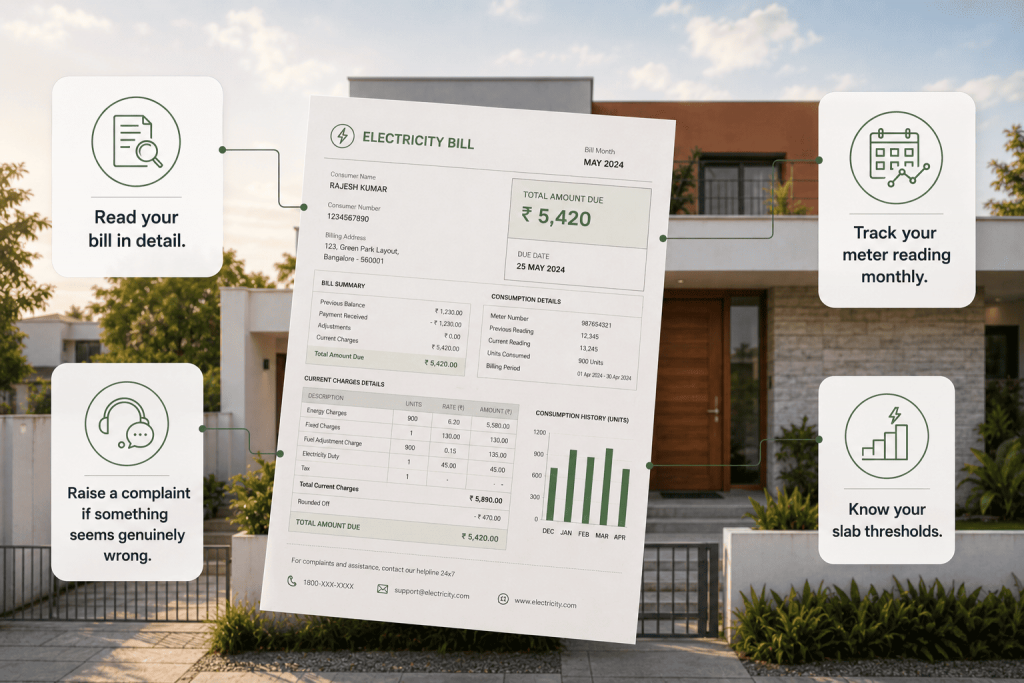
Read Your Bill in Detail
Don’t just look at the total amount. Check the units consumed, applicable charges, billing period, and any surcharges or adjustments. Once you understand each component, variations become easier to explain.
Track Your Meter Reading Monthly
Take a photo of your electricity meter on the same date each month. This gives you a simple record that you can compare with the readings on your bills.
Know Your Tariff Slabs
If your typical consumption is close to a tariff threshold, understanding the applicable slab structure can help you better anticipate changes in your bill.
Raise a Complaint If Something Seems Wrong
If your bill increases dramatically without a clear explanation, contact your DISCOM and request a detailed bill breakup or meter check through the available grievance redressal process.
Can Rooftop Solar Make Electricity Costs More Predictable?
Electricity bills can vary because of several factors beyond your day-to-day consumption, including tariff structures, fuel-related adjustments, billing cycles, and regulatory revisions.
This is also why a growing number of households are exploring rooftop solar, not just to reduce their electricity bills, but to reduce their dependence on grid electricity.
When a meaningful portion of your home’s electricity is generated through rooftop solar, fewer units need to be drawn from the grid. This can help reduce your exposure to changes in grid electricity costs while giving you greater control over how your home uses energy.
Understanding your electricity bill is the first step. Knowing you have options is the second.

