


Buying an AC today is no longer a simple decision.
Especially when electricity bills are rising, power cuts are frequent, and the term “Solar AC” is being used loosely across the market.
The real confusion for many buyers is simple: what actually works in Indian conditions?
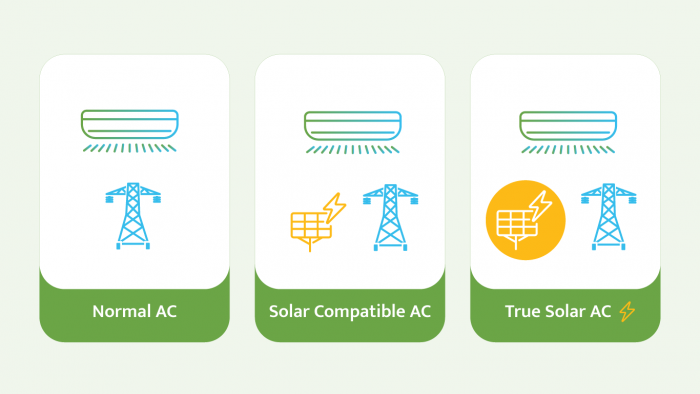
The 3 Types of ACs You’ll Hear About
When exploring options, most buyers come across three categories:
- Normal AC
- Solar-Compatible AC
- Solar AC (not all are the same)
Let’s break down what each one actually means.
1. Normal AC
Works only on electricity.
Pros
- Reliable when grid power is available
- Widely available and familiar technology
Cons
- Stops during power cuts
- Leads to high electricity bills
- Offers no solar integration benefits
Best for: Homes with stable electricity and low concern about electricity costs.
2. Solar-Compatible AC
Can connect to solar, but is not fully solar-powered.
What It Does
- Can connect to solar panels
- May reduce electricity consumption partially
Limitations
- Still depends heavily on grid electricity
- Does not guarantee cooling during power cuts
- Often requires large battery backup
- Performance varies based on sunlight availability
In simple terms, it is grid-first and solar-assisted, not solar-first.
3. True Solar AC
Designed specifically for real Indian operating conditions.
What It Does
- Runs on solar power during the day
- Continues cooling during power cuts
- Adjusts performance based on sunlight availability
- Reduces dependence on electricity from the grid
It is not just connected to solar. It is designed to run on solar first.
Side-by-Side Comparison
| Feature | Normal AC | Solar-Compatible AC | True Solar AC |
|---|---|---|---|
| Runs on Electricity | ✔ | ✔ | Partial |
| Runs on Solar | ❌ | ✔ | ✔ |
| Works During Power Cuts | ❌ | Limited | ✔ |
| Handles Sunlight Fluctuation | ❌ | ❌ | ✔ |
| Battery Requirement | None | High | Optimized |
| Electricity Bills | High | Moderate | Low |
Real-Life Scenario
Imagine a summer afternoon in Uttar Pradesh:
Temperature: 44°C
Power Cut Occurs
| AC Type | What Happens |
|---|---|
| Normal AC | Stops immediately |
| Solar-Compatible AC | Trips or becomes unstable |
| True Solar AC | Keeps running |
The Biggest Myth Buyers Believe
“If it’s solar, it will automatically work during power cuts.”
That is not true.
Most so-called solar ACs:
- Are not designed for outages
- Still depend heavily on electricity
- Cannot handle real-world fluctuations effectively
Which One Should You Choose?
Choose Normal AC If:
- Power cuts are rare in your area
- Electricity cost is not a major concern
Choose Solar-Compatible AC If:
- You only want partial bill savings
- Backup during power cuts is not a priority
Choose True Solar AC If:
- Power cuts regularly affect your comfort
- You want cooling even without electricity
- You want long-term savings and energy independence
Why This Matters Today
- Heatwaves are increasing
- Power demand is rising
- Grid reliability remains inconsistent in many areas
- Cooling expectations are changing rapidly
If you are exploring solar cooling options, understanding the difference between solar-compatible AC and True Solar AC is critical.
Because that difference decides whether your AC keeps running or shuts down when you need it most.

