



Every month, millions of Indians do exactly the same thing when they receive their electricity bill. Their eyes go straight to one number.
Amount Payable: ₹2,850 / ₹4,170 / ₹6,230
They sigh, make the payment, and move on. But here’s the surprising part.
The amount payable is probably the least useful number on your electricity bill.
The number that deserves your attention is one most homeowners never even notice. It can help you understand your consumption pattern and make smarter decisions about how you use electricity.
Let’s forget the total bill for a moment. Instead, find this:
Units Consumed (kWh)
This single number tells you how much electricity your home actually used during the billing period.
Everything else on your bill, from energy charges and tariff slabs to fuel adjustment charges and even the savings a rooftop solar system can deliver, starts with this number.
Your bill amount can change because tariffs and other charges change. But your units consumed reveal how your home actually behaves.
Same Bill. Different Electricity Usage.
Imagine two homeowners who both receive an electricity bill of ₹4,000.
At first glance, they appear to consume the same amount of electricity, right? Actually, they may not.
Homeowner A may live in an area with lower tariffs, while Homeowner B may fall into a different tariff slab. One may have consumed 500 units, while the other may have consumed only 380.
The bill looks similar, but their electricity usage is completely different.
If you only look at the amount payable, you’re missing the story. Units tell the real story.
Think of Your Electricity Bill Like a Medical Report
The amount payable is like the hospital bill after treatment. It tells you what you owe, but it doesn’t tell you what’s happening inside.
Units consumed are more like your test results. They reveal what’s actually happening inside your home.
Every extra hour the AC runs, every ageing refrigerator, every inefficient pump, and every additional appliance eventually shows up in one place: your unit consumption.
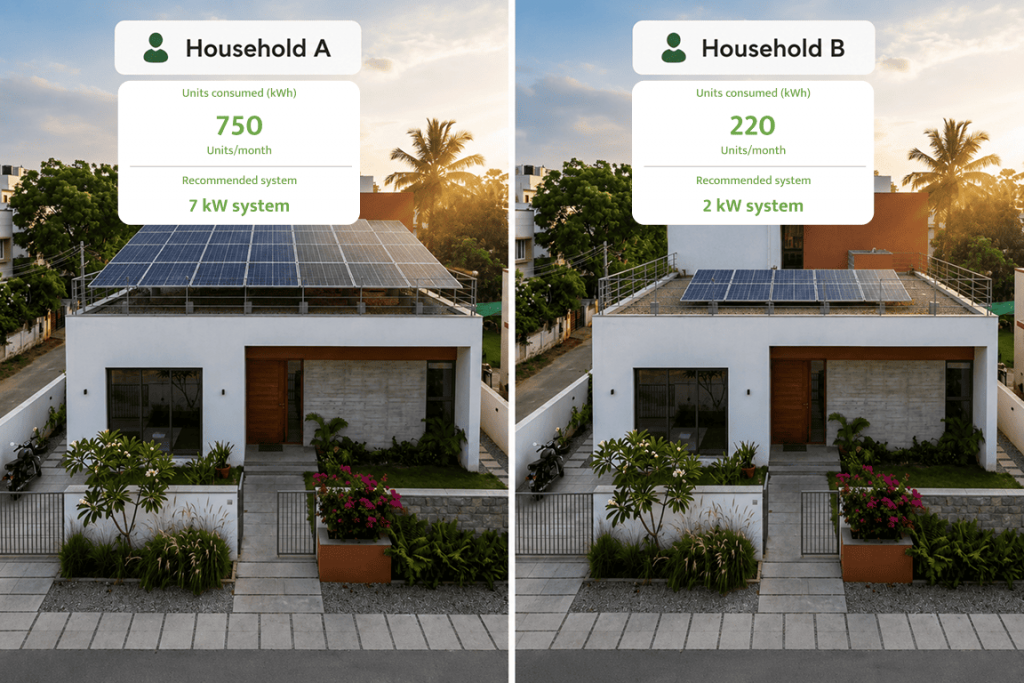
Why Units Matter When Choosing Rooftop Solar
One of the biggest mistakes homeowners make is choosing a rooftop solar system based only on their monthly electricity bill.
Instead, the system should be sized based on your actual energy consumption and other technical feasibility factors.
Two people paying ₹5,000 every month might require completely different solar system sizes because their unit consumption can be different.
That’s why responsible solar companies don’t start with just your bill amount. They start by understanding your energy usage.
When you understand your units, you don’t just buy solar. You can choose a better-sized solar system for your needs.
Too small, and you may still depend heavily on the grid. Too large, and you may spend more than necessary.
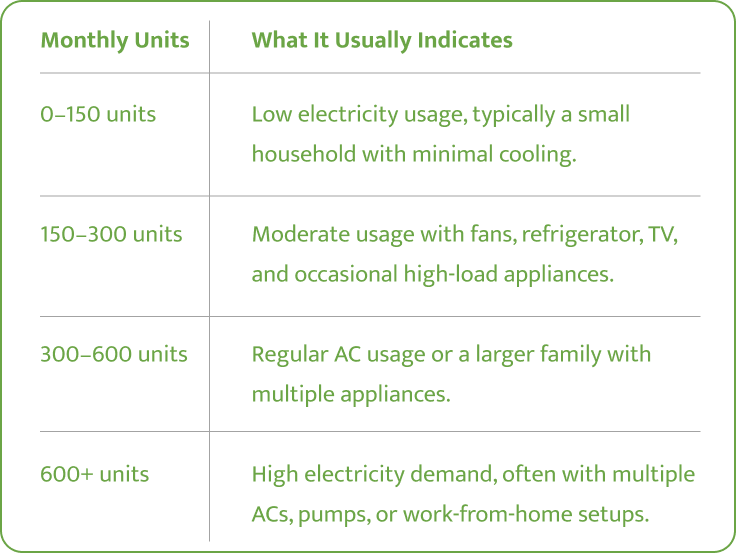
What Your Monthly Units Say About Your Home
| Monthly Units | What It Usually Indicates |
|---|---|
| 0–150 units | Low electricity usage, typically a small household with minimal cooling. |
| 150–300 units | Moderate usage with fans, refrigerator, TV, and occasional high-load appliances. |
| 300–600 units | Regular AC usage or a larger family with multiple appliances. |
| 600+ units | High electricity demand, often with multiple ACs, pumps, or work-from-home setups. |
Track Your Units for the Next Six Month
Don’t just keep your electricity bills. Track your monthly units consumed.
Notice when they increase. Notice when they fall.
Over time, you’ll begin to understand how seasons, appliances, and daily habits affect your home’s energy needs. More importantly, you’ll know whether your overall consumption is growing, something many homeowners only realise after years of rising bills.
From Paying for Electricity to Understanding It
For decades, electricity has been something we noticed once a month, when the bill arrived.
That is beginning to change.
Today’s homeowners aren’t just asking, “How much do I owe?” They’re also asking, “Where did every unit go?”
Smart homes, energy monitoring platforms, and rooftop solar solutions are shifting the conversation from simply paying for electricity to understanding it.
Because the more you understand your energy, the more control you have over it.
One Number. A Much Bigger Picture.
The next time your electricity bill arrives, ignore the amount payable for a moment.
Instead, look for one small number: Units Consumed.
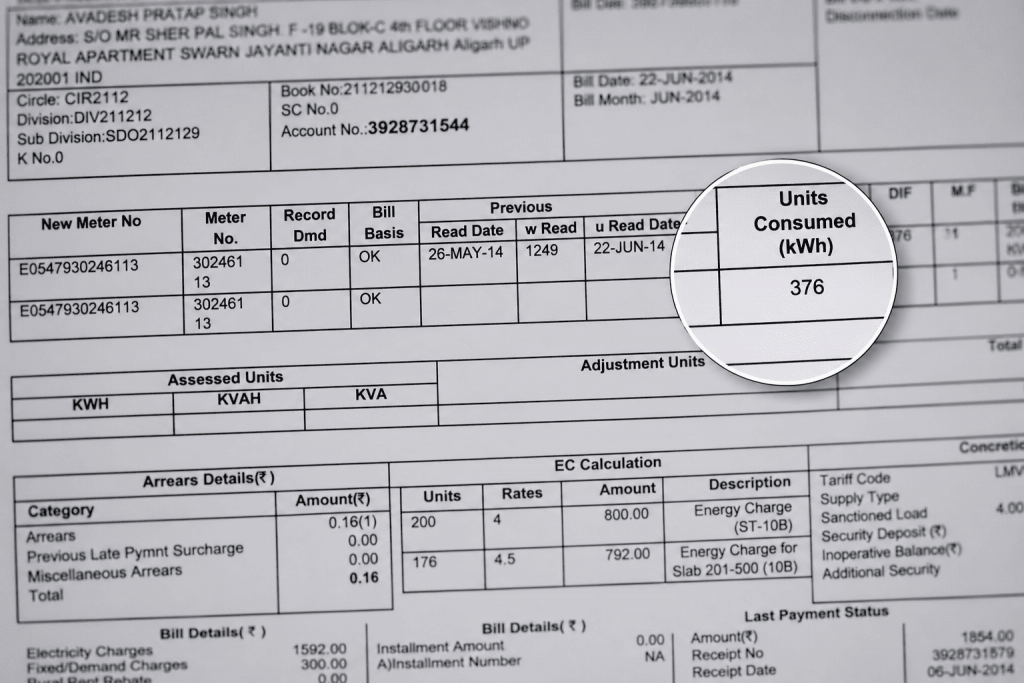
That number can tell you far more about your home’s energy behaviour than the final bill amount. And if you’re considering rooftop solar in the future, it may be one of the most important numbers to understand.
Disclaimer: Tariff structures, slab rates, fixed charges, and surcharge components vary by DISCOM and are subject to revision by UPERC. The figures and structures described in this blog are indicative and based on general residential tariff patterns. Always refer to your actual bill and your DISCOM’s published tariff schedule for precise calculations applicable to your connection.

