

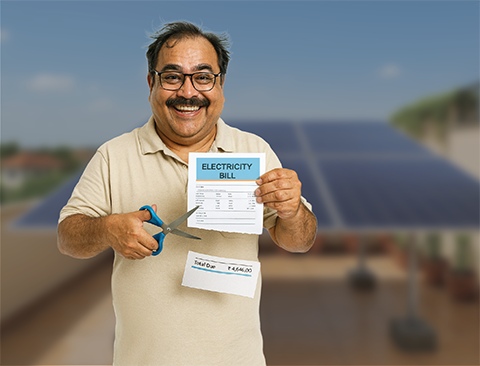

Got Free Bijli… But Still Worried About the Bill?
Many homeowners who install rooftop solar under the PM Surya Ghar Muft Bijli Yojana (PMSGY) feel excited about the promise of up to 300 units of free electricity every month with a 3 kW solar system.
But a few weeks after installation, a common concern starts appearing: what happens if you consume more electricity than your solar system generates? Will you still get a big bill?
If this question has crossed your mind, you’re not alone. In this guide, we explain how electricity billing works after solar installation and how simple usage habits can help you stay within the free range.
Under PMSGY, rooftop solar can significantly reduce and sometimes nearly eliminate electricity bills. With a little awareness and smart energy usage, most households can comfortably stay within the free electricity limit.
This guide explains:
- How electricity billing works after installing solar under PMSGY
- What appliance usage actually means in electricity units
- Practical tips to avoid unexpected bill increases
Whether you have already installed solar panels or are planning to do so, this guide will help you maximize your PMSGY savings without confusion.
Simplifying Net Metering
Net metering is the system that makes rooftop solar beneficial for homes under the PM Surya Ghar Muft Bijli Yojana.
Here is how it works:
- During the day, especially between 10 AM and 4 PM, solar panels generate electricity.
- Your home appliances first use this solar electricity.
- If the solar system generates more electricity than your home needs, the extra power is exported to the grid.
- These exported units are credited to your electricity meter.
- At night or during cloudy periods, when solar generation is low, your home draws electricity from the grid.
The electricity bill is calculated as:
Units Imported – Units Exported = Net Units
If the exported units are equal to or greater than the imported units, your energy charges can be zero or very low. Some fixed charges may still apply depending on your DISCOM.
You can think of the grid as a virtual battery. It stores the extra solar energy you produce during the day and supplies it back when you need electricity at night.
The Unit Comfort Zone
A typical 3 kW rooftop solar system under PMSGY can generate around 300 to 400 units per month depending on location and sunlight.
If your monthly electricity consumption stays within this range, your energy charges usually remain close to zero. You may still see minor fixed charges on the bill, but nothing close to the bills before installing solar.
Appliance Usage: Where Bills Can Increase
Electricity bills usually increase when:
- Heavy appliances are used mainly at night
- Multiple high power appliances run at the same time
- Solar generation hours are not utilized effectively
This is where smart appliance usage can make a big difference.
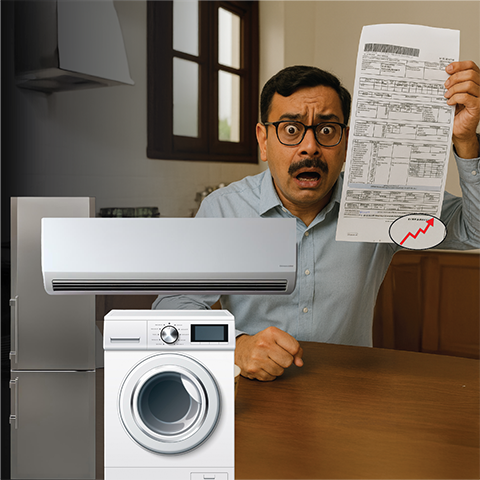
Appliance Usage: Understanding Daily Consumption
Here is a simplified example of how common appliances consume electricity:
| Appliance | Power | Daily Use | Units per Day | Smart Solar Tip |
|---|---|---|---|---|
| Air Conditioner | 1500 W | 5 hrs | 7.5 units | Use energy-saving settings |
| Refrigerator | 150 W | 24 hrs | 3.6 units | Efficient models help reduce usage |
| Water Pump | 1000 W | 2 hrs | 2 units | Operate during daylight hours |
| Washing Machine | 700 W | 1 hr | 0.7 units | Run during solar peak hours |
| Iron | 1000 W | 30 min | 0.5 units | Use during the day |
Even homes with higher electricity usage can stay within limits by shifting appliance usage to solar generation hours.
Night-Time AC Usage: The Common Concern
A common myth around rooftop solar is that running an air conditioner at night will always result in a high electricity bill.
The reality is more balanced. Night usage does matter, but it can still be managed effectively.
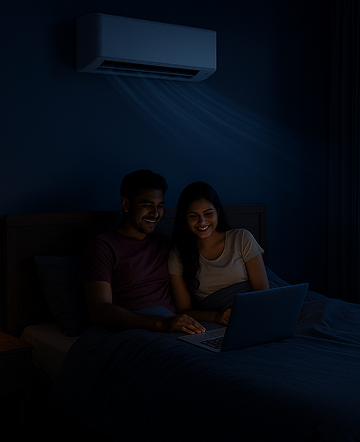
During summer months, air conditioner usage at night is often unavoidable. Since solar panels do not generate power after sunset, electricity used at night comes from the grid.
However, daytime solar generation usually builds a credit through net metering. If you use heavy appliances during solar hours, the extra units generated can offset night-time consumption.
Practical Summer Tips
- Set AC temperature between 24°C and 26°C
- Use sleep mode during late night hours
- Run ceiling fans along with AC to reduce compressor load
Most homes with a 3 kW solar system still remain under 300 net units per month even with moderate AC usage at night.
Winter Reality: Heater Usage
In winter, heaters are usually used for shorter durations compared to air conditioners. They are also seasonal appliances used only for a few months.
Smarter Winter Choices
- Prefer oil-filled or ceramic heaters instead of coil heaters
- Use heaters only in occupied rooms
- Use natural sunlight and insulation during the day
Since solar generation continues during winter daytime hours, many homes can offset heater usage without crossing billing thresholds.
Smart Usage Strategies to Keep Your Bill Low
1. Time Your Heavy Loads
The golden rule of solar is simple: run heavy appliances when the sun is generating electricity.
Solar production usually peaks between 10 AM and 4 PM. Running appliances like pumps, irons, and washing machines during this window ensures you are using solar energy instead of grid electricity.
2. Avoid Night-Time Spikes
Running multiple appliances late at night increases grid consumption and can push monthly electricity usage beyond the free slab.
3. Track Your Electricity Consumption
Monitoring your solar production and grid consumption helps you understand usage patterns. Many solar providers, including Ecozen, offer apps that allow homeowners to monitor daily energy generation and grid imports.
This visibility helps households manage their electricity consumption more efficiently.
Frequently Asked Questions
Does using more electricity cancel my subsidy?
No. Subsidy benefits are not affected if your electricity consumption increases.
Will solar power damage my appliances?
No. Solar electricity works seamlessly with the grid and is completely safe for household appliances.
Can I add more appliances after installing solar?
Yes, but it is important to plan your energy usage carefully to maintain maximum savings.
Conclusion
PMSGY is designed to make clean energy affordable and accessible. However, smart energy usage plays a big role in maximizing the benefits of your solar system.
With the right habits, most households can enjoy reliable electricity, significantly reduced bills, and long-term savings.
If you ever need guidance, experienced solar partners like Ecozen can help you understand billing, optimize energy usage, and get the most value from your rooftop solar system.
Solar is not just about installation. It is about using the energy you generate in the smartest way possible.

