

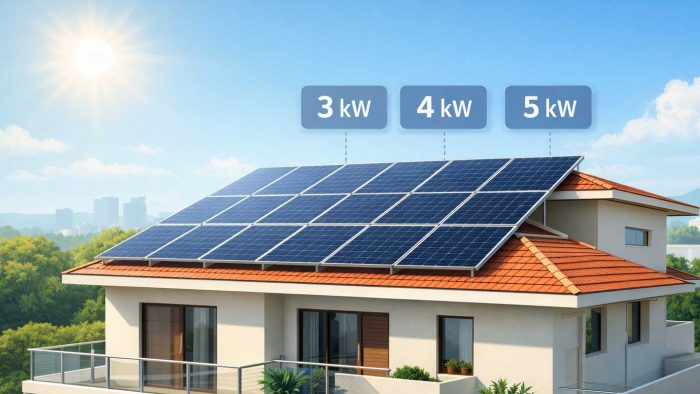

Choosing the right solar system for your home is one of the most important steps in your rooftop solar journey.
Whether you’re applying through the PM Surya Ghar Muft Bijli Yojana (PMSGY) or installing solar independently, selecting the correct capacity (kW) and system type ensures maximum savings, better performance, and smooth approvals from your DISCOM.
This guide helps you estimate the ideal solar system size for your household without getting lost in technical jargon.
1. Why Choosing the Right Capacity Matters
Solar capacity determines several important things:
- How much electricity your system generates
- How much of your monthly electricity bill you can reduce
- Whether your DISCOM approves the proposed system size
- The rooftop space required for installation
- Your upfront investment and subsidy eligibility
Choosing a system that is too small reduces potential savings. Choosing a system that is too large may be rejected by the DISCOM or underperform due to shading or space limitations.
2. Understand Your Home’s Electricity Consumption
Before selecting solar capacity, check two key things.
Your Monthly Electricity Usage
Review your electricity bills from the last 6 to 12 months and identify:
- Highest monthly consumption (usually summer)
- Lowest monthly consumption
- Average monthly consumption
Your Sanctioned Load
Your sanctioned load is mentioned on your electricity bill.
In most cases:
1 kW sanctioned load supports approximately 1 kW of solar capacity.
Many DISCOMs allow solar capacity equal to the sanctioned load or slightly higher depending on local regulations.
3. How to Calculate the Right Solar Capacity
A useful rule of thumb:
1 kW solar system generates around 4 to 5 units of electricity per day.
This equals roughly 120 to 150 units per month.
| Monthly Electricity Consumption | Recommended Solar Capacity |
|---|---|
| 150 to 250 units | 1 to 2 kW |
| 250 to 350 units | 2 to 3 kW |
| 350 to 450 units | 3 to 4 kW |
| 450 to 600 units | 4 to 5 kW |
| 600+ units | 5 to 7 kW (depending on DISCOM approval) |
Note: Actual output depends on sunlight availability, shading, panel quality, and inverter efficiency.
4. Check Your Rooftop Space
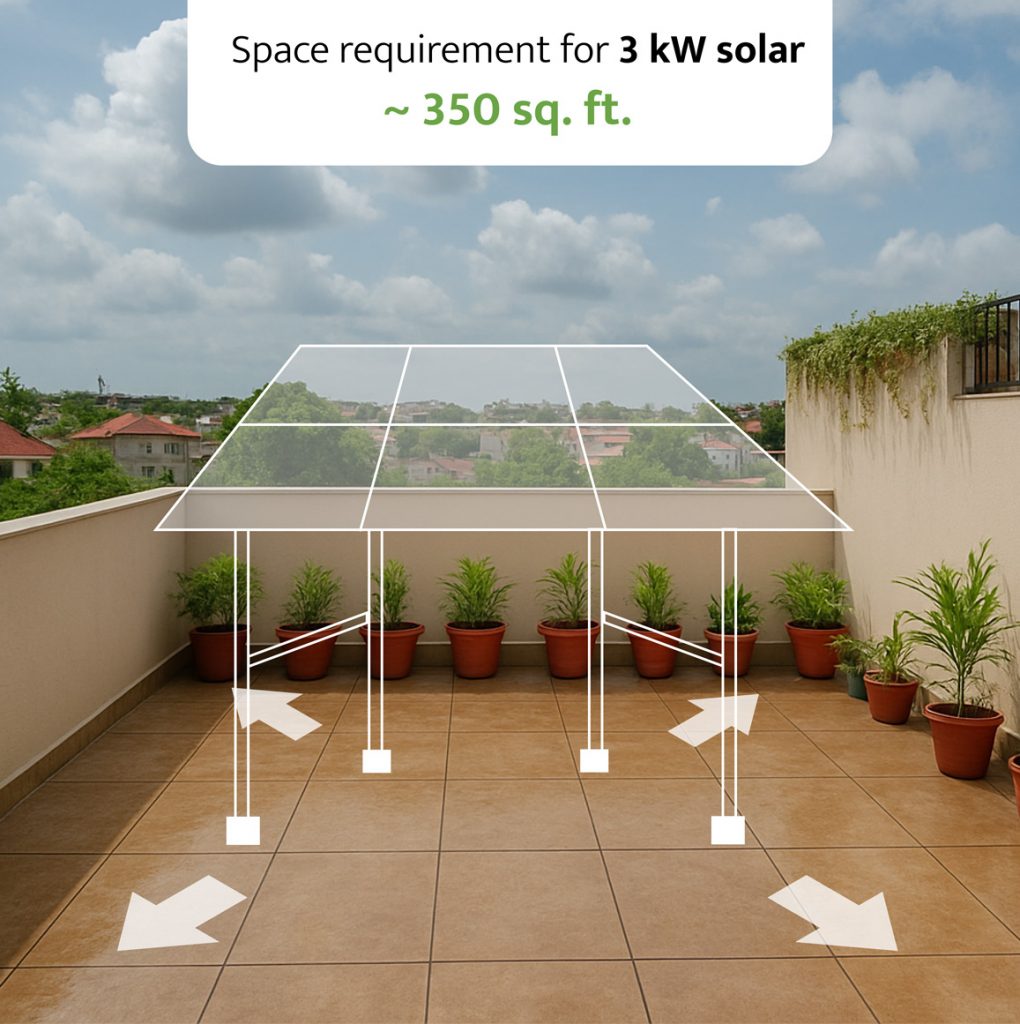
On average, 1 kW of rooftop solar requires around 80 to 100 square feet of shadow-free area.
Approximate space requirements:
- 2 kW system: about 180 sq. ft.
- 3 kW system: about 280-350 sq. ft.
- 5 kW system: about 450 to 500 sq. ft.
If your roof has shading from nearby buildings, water tanks, or trees, the usable capacity may be lower.
5. Technical Factors That Affect System Approval
Before approving a solar proposal, vendors and DISCOM officials typically evaluate:
- Roof strength and tilt angle
- Shading from water tanks, trees, or nearby structures
- Condition of existing electrical wiring
- Phase type (single-phase or three-phase connection)
- Meter type and net-meter compatibility
- Sanctioned load of the connection
- Net-metering policies in your state
Your final approved solar capacity may depend on these technical factors.
6. How Subsidy Affects System Size (For PMSGY Applicants)
Under PM Surya Ghar Muft Bijli Yojana, the subsidy amount depends on the approved system capacity, not the quoted system size.
Important requirements include:
- The installer must be an empanelled vendor
- Solar modules and inverters must meet MNRE specifications
- Subsidy is credited only after DISCOM inspection and commissioning
Important: Subsidy policies and limits may change over time. Always verify the latest details on the official government portal.
7. Quick Checklist Before Selecting Solar Capacity
Before finalizing your solar system, consider the following questions:
- What is my average monthly electricity usage?
- How much rooftop space is actually usable?
- Does my sanctioned load support the proposed solar capacity?
- Do I need backup power during outages?
- Is my rooftop shaded or clear?
- Do I want lower upfront cost or maximum long-term savings?
- Am I eligible for net metering and subsidy?
A reliable solar vendor will help you evaluate these factors before recommending the right system.
Conclusion
Selecting the right solar capacity and system type does not have to be complicated.
You simply need to balance:
- Your household energy consumption
- Your budget
- Your rooftop space
- Your need for power backup
- Your DISCOM’s approval guidelines
Whether your goal is to reduce electricity bills or install a solar system with battery backup, choosing the correct system size ensures you get the best return from your solar investment.
Got Questions? Reach out to the experts at Ecozen Rooftop Solar

