
+91 9860 9860 45
Get a free consultation call from us today
Fill the below form and get a callback from ecozen solar expert
PM Surya Ghar Muft Bijli Yojana
Ecozen is an empaneled vendor under the PMSGY scheme, helping homeowners adopt solar seamlessly
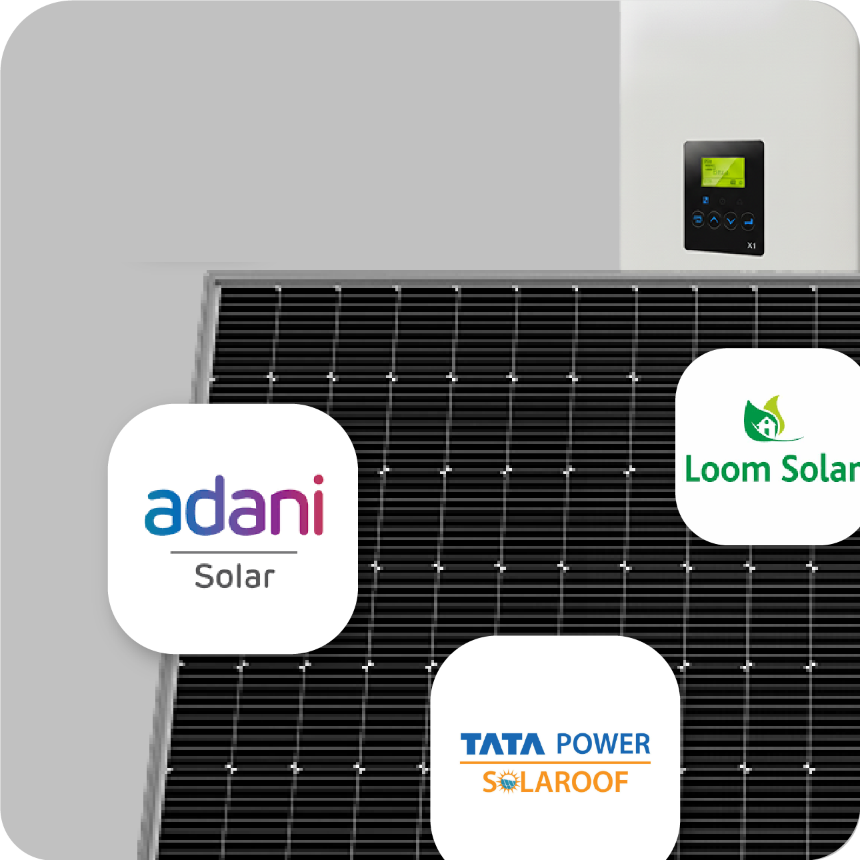
We help you choose from the most trusted & top Solar Panel and Inverter Brands from India
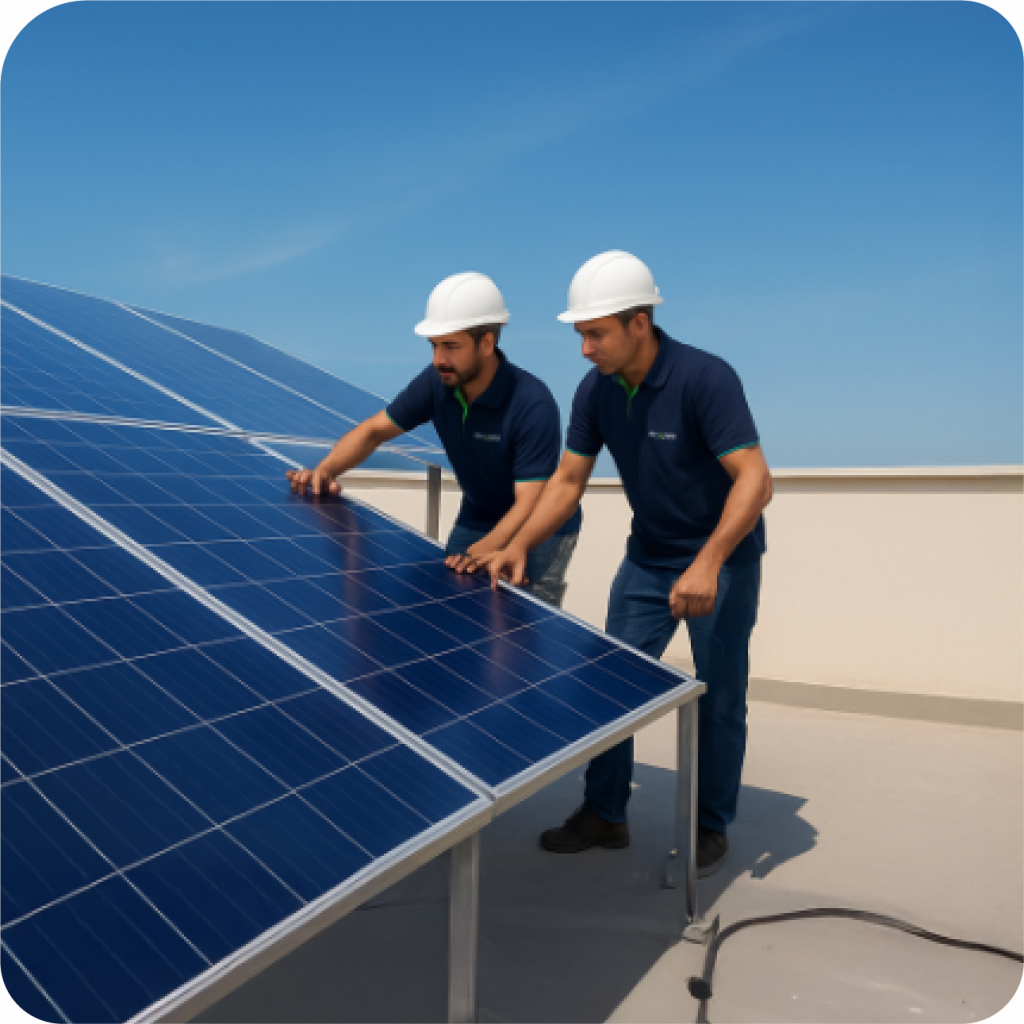
With a wide service network and experience of 4 Lakh+ Solar installations, our expert engineers and process ensure seamless installation.
With Ecozen certified Dealers, you get assured service warranty and care plans.
Get a free consultation call from us today
Fill the below form and get a callback from ecozen solar expert
Service You Can Count On

Trusted Brands & Quality Components

Reliable Service Network across India

Standard Installation Process

15+ Years of Expertise with 4L+ installations
Ecozen-certified
With Ecozen-certified dealers, you get more than guidance.
Get guaranteed installation by trained experts, seamless paperwork and approvals, and ongoing care through our service plans and mobile app.
Care beyond Installation
Protected by Ecozen Care

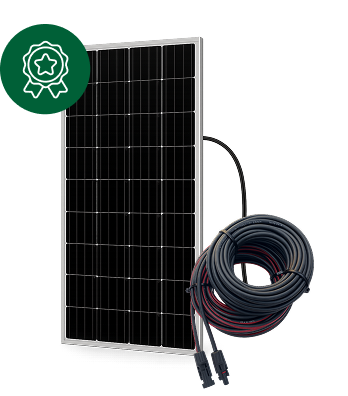
Solar Panels
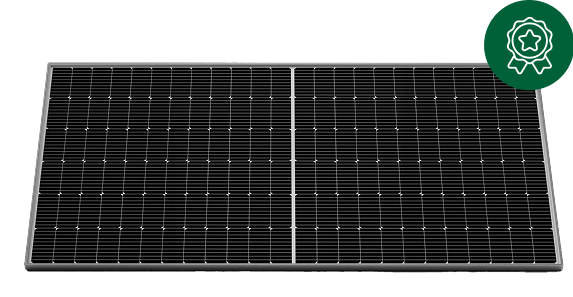
25 Years Performance Warranty
Inverters
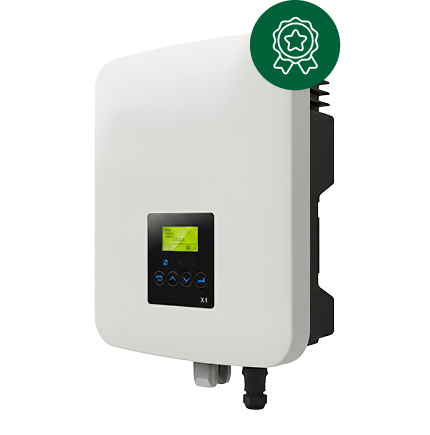
7 Years Warranty
Structure
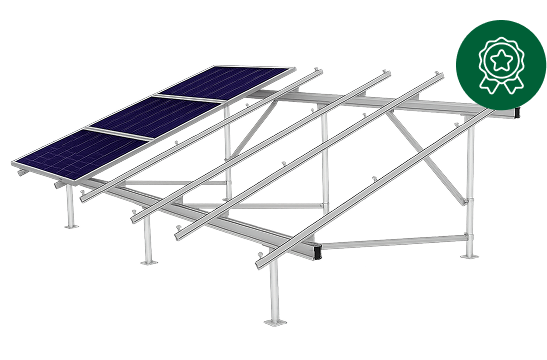
5 Years Warranty
Other Parts
5 Years Warranty
Bharat ka Smart Bharosa
Rated 4.9 on Google with 3000+ reviews

How to get Ecozen Solar
Buying Solar, Made Easy
step 01
Apply Under PMSGY portal. Select Ecozen as a vendor.
step 02
Pay ₹3000 (refundable) to book site survey
step 03
Site survey & system design
step 04
Installation within 5–7 days after approval
Become an Ecozen-certified dealer
Grow your business with Ecozen.Partner with us to serve your solar customers
Locate a dealer near you
Wish to know more about Ecozen?
We’ll take up all your questions, just drop us your number. We’ll call you.
Frequently Asked Questions
What is the Pradhan Mantri Surya Ghar Yojana (PMSGY)?
The Pradhan Mantri Surya Ghar Yojana (PMSGY), also known as the PM Surya Ghar Muft Bijli Yojana, is a flagship government scheme launched by Prime Minister Narendra Modi on February 15, 2024, to promote rooftop solar installations for residential households across India.
How much subsidy can I get under this scheme?
Subsidy Amounts
- Up to 2 kW: ₹30,000 per kW (i.e., ₹30,000 for 1 kW, ₹60,000 for 2 kW).
- Between 2 kW and 3 kW: ₹18,000 per additional kW for the third kW (maximum subsidy for a 3 kW system: ₹78,000).
- Above 3 kW: No further central subsidy; maximum possible is capped at ₹78,000 per residential household.
The central financial assistance (subsidy) is equal to 60% of the benchmark cost for systems up to 2 kW, and 40% for the additional capacity between 2 and 3 kW.
UP Government’s additional Subsidy:
– The UP state subsidy provides ₹15,000 per kW up to a maximum of ₹30,000 (available for systems of 2 kW and above)
Who can apply for the scheme?
- Homeowners with a suitable roof, valid electricity connection, and not having availed another solar subsidy.
- Only one subsidy per household, direct transfer to the bank account after installation and grid connection.
How can I apply for the subsidy?
Step-by-Step Process:
- Register Online
- Register as a homeowner or society at the national portal: [pmsuryaghar.gov.in]. You will need to provide identification, property ownership, and recent electricity bill details.
- Submit Application
- After registration, log in to your account and fill out the application. Furnish system details (capacity, type), vendor details, property address, and required documents.
- Technical Feasibility & Approval
- The application is sent to your area DISCOM for technical feasibility assessment (sanctioned load, roof suitability, etc.). Approval or order for correction will be given online.
- Choose Empanelled Vendor
- Once approved, select a solar vendor empanelled with UP NEDA and your DISCOM. The vendor will handle installation as per MNRE/UPNEDA standards.
- Installation & Work Submission
- After system completion, submit a work completion report, photographs, and details (including net metering) via the portal.
- Inspection & Commissioning
- Your DISCOM/UPNEDA will inspect and commission the solar system. Upon approval, the system’s connection to the grid is formalized.
- Subsidy Disbursement
- The combined central and UP additional subsidy will be transferred directly to your bank account as a Direct Benefit Transfer within 30 days of commissioning.
What documents do I need for processing?
- ID proof (Aadhaar, PAN, or passport)
- Property ownership/lease papers
- Recent electricity bill
- Vendor quotation from empanelled vendor
What benefits will I get after installation?
- Subsidy Benefit: Direct benefit transfer of up to ₹78,000 (central subsidy) plus any applicable state subsidy (like UP subsidy), reducing your upfront installation cost significantly.
- Free Electricity: Households get up to 300 units of free solar electricity every month, which lowers monthly electricity bills and results in substantial savings over time.
- Energy Independence: Generate and consume your own clean energy, reducing dependence on grid power and protecting against fluctuating electricity tariffs.
- Net Metering Advantage: Surplus energy generated can be fed back into the grid, earning credits or payments from the utility company.
- Environmental Impact: Reduced carbon footprint by using renewable solar energy, contributing to India’s climate commitments.
- Increased Property Value: Properties with rooftop solar systems typically see an increase in market value due to lower energy costs and sustainability features.
- Support and Maintenance: The scheme encourages empanelled vendor networks for installation and maintenance with quality standards ensuring long-term system performance.
- Loan Availability: Concessional loans with easy EMI options are available under the scheme to ease financial burden on households, combined with subsidies further lowering cost.
- Overall, installing solar under PM Surya Ghar provides immediate financial relief via subsidies, long term savings via free electricity, and sustainable, eco-friendly energy independence.
Significance of GST Reduction
- The reduction from 12% to 5% on solar panels, inverters, and bundled solar systems lowers capital costs by around 8–10%, making rooftop solar installations more affordable for households and commercial users.
- Installation and commissioning services attract 18% GST under “Works Contract Services” category.
- The lower overall GST simplifies compliance for vendors and reduces installation costs for consumers.
- This GST rationalization aligns with government goals for rapid rooftop solar deployment under PM Surya Ghar and other renewable energy initiatives, empowering more consumers to benefit from clean solar power.
What is net metering?
Net metering under the PM Surya Ghar Muft Bijli Yojana allows rooftop solar system owners to feed surplus electricity generated back to the grid and receive credit for it, reducing overall electricity bills.
- Applicable for Rooftop Solar Systems: Generally for systems up to 10 kW for residential consumers, approval for net metering is automatic (deemed feasible) under the Electricity (Rights of Consumers) Rules, 2020.
- Meter Installation: The Distribution Company (DISCOM) installs bidirectional net meters after installation and inspection of your solar plant, allowing measurement of both electricity consumed and sent to the grid.
- Export and Billing: Surplus energy exported to the grid is credited and adjusted in your monthly or yearly electricity bills depending on state regulations. For example, Uttar Pradesh carries forward net units monthly and settles them yearly.
- Financial Benefits: Net metering reduces dependence on grid electricity and maximizes solar power utilization, further enhancing savings beyond the subsidy.
How does net metering work?
Steps:
- Register and apply for a rooftop solar system and net meter on the national portal.
- Get technical feasibility approved automatically for ≤10 kW.
- Choose an empanelled solar vendor for installation.
- DISCOM inspects and installs the net meter.
- Get system commissioned and subsidy disbursed.
- Export surplus power and receive bill credit.
How does solar rooftop system work?
- Solar Panels Absorb Sunlight:
The solar panels, made of photovoltaic (PV) cells typically using silicon semiconductor materials, absorb sunlight. Photons in sunlight knock electrons loose from atoms inside the cells, generating a flow of electrons – an electric current (Direct Current, DC). - Conversion to Usable Electricity:
Since homes use Alternating Current (AC), the DC electricity generated by solar panels is converted into AC by a solar inverter. This inverter can be installed on the roof or inside the home. - Electricity Flows into the Home:
The AC electricity is then fed into the home’s electrical system to power appliances, lights, and other electrical loads. - Surplus Energy Handling:
If the solar system produces more electricity than the home needs, the surplus can either be stored in an optional battery system or exported back to the power grid via net metering. Net metering credits the homeowner for the electricity supplied, reducing future bills. - Grid Interaction:
When solar power isn’t sufficient (e.g., at night or cloudy days), electricity is drawn from the grid to meet the home’s requirements, ensuring uninterrupted power supply.
How much can I save with solar rooftop?
Take a middle-class family in Lucknow paying ₹2,000 monthly on electricity. With rooftop solar, their ₹24,000 annual burden drops significantly. Over 20 years, the savings could fund a child’s college education or cushion rising living costs.
Can solar rooftop damage my roof?
Solar rooftop systems generally do not damage your roof if installed correctly by experienced professionals. Here is a concise summary of how solar panels impact your roof:
Roof Impact of Solar Rooftop Systems:
- Installation Quality Matters: Proper mounting and sealing of roof penetrations by certified installers prevent leaks and structural damage. Improper installation, such as poorly sealed holes or inadequate flashing, can lead to water damage and roof deterioration.
- Protection from Sun & Weather: Solar panels shade roof surfaces, protecting shingles from UV rays and weathering, which can potentially extend the roof’s lifespan by reducing sun and rain exposure.
- Weight Consideration: Solar panels add weight to the roof, but typical residential roof structures are designed to support this. A roof inspection is recommended before installation to confirm structural integrity.
- Maintenance and Repairs: Roof repairs underneath or near solar panels can be more complicated and costly. Installing on an aging or damaged roof is not advisable until repairs or replacement are done.
- Environmental Risks: Panels can face damage from hail, storms, or wind which might affect roofing materials indirectly. Proper system design accounts for wind load and weather resilience to mitigate these risks.
When professionally designed and installed, rooftop solar systems do not harm and may even protect your roof. Ensuring installer certification, roof health checks, and correct sealing practices are key to preventing any damage.
If the roof is already old or damaged, it’s best to repair or replace it first before installing solar panels to avoid complications.
Connect with our expert consultants
+91 70260 10044
+91 70260 10066
+91 70260 11188
+91 70260 12266

© 2026 Ecozen Solutions Pvt. Ltd. (All rights reserved)
901, Amar Tech Park, Next to Mitcon College, Balewadi, Baner Gaon, Haveli, Pune - 411045, Maharashtra, India
Survey No. 134/1, 134/2, 130/3, Dehu Road, Katraj Bypass, Tathawade, Pune - 411 033, Maharashtra, India
Near Smart Kid School, Sr.No.44/2 Near Canal Road, Mulshi, Marunji, Pune, Maharashtra, 411057
VIP Road, Ajuba Park Campus, Near Hotel Grand Neelam, Raipur – 492 006, Chattisgarh, India